

Start Earning: How Smart Reordering Unlocks Hidden Profits in Your Hayati Range
Every week you place a wholesale order. Do
you base it on data, or your instincts?
Most retailers reorder intuitively. They
pick a few empty slots, chase their previous bestsellers, and hope the shelf
manages to balance itself. It rarely does. You run out of your stars on Friday
and have entire boxes of forgotten flavours on your Monday. Ordering in data
transforms intuitive reorders into a powerful competitive edge. It is the
cheapest edge to create - all you need is your sales log, and a few simple
calculations.
This is most potent on high-demand brands,
where Hayati can
turbocharge your cashflow by turning your stock into cash within days. Poorly
managed, the same range can swallow up hundreds of pounds in slow movers and
unsold kits. It all depends on how you read the data. The same brand and the
same supplier, but different management approaches.
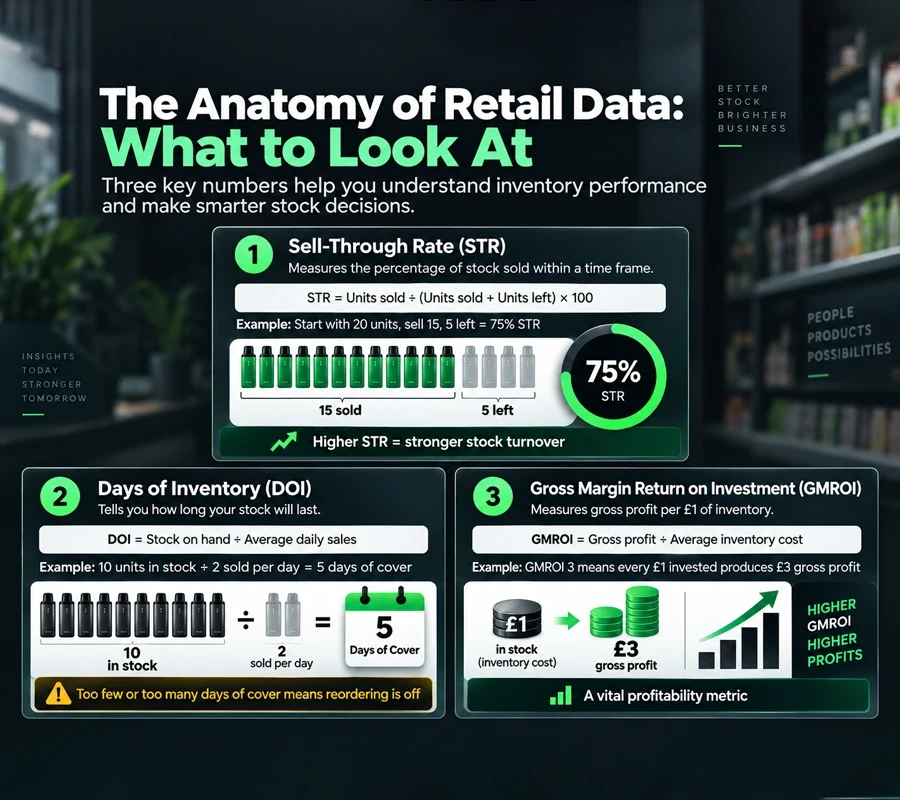
The Anatomy of Retail Data: What to Look At
There are three main numbers you should be
analysing to make sense of your inventory.
1. Sell-Through Rate (STR)
STR measures the percentage of stock sold within a time frame.STR = Units sold ÷ (Units sold + Units left) × 100
If you started the month with 20 units and sold 15, your STR would be 75%. STR demonstrates your ability to turn stock into cash - the higher the STR, the better.
2. Days of Inventory (DOI)
DOI tells you how long your stock will last.DOI = Stock on hand ÷ Average daily sales
If you have 10 units and sell two a day, you have five days of cover. Too few or too many days of cover means you are ordering incorrectly.
3. Gross Margin Return on Investment (GMROI)
GMROI is a profitability metric that measures gross profit per £1 of inventory.GMROI = Gross profit ÷ Average inventory cost
If GMROI is 3, every £1 you invest in inventory produces £3 gross profit. This is a vital number to track.
Hero products vs shelf warmers
Sort your SKU list by STR and GMROI, then
divide them into three categories.
- Heroes: high STR, strong GMROI.
Protect your stars and never let them run out.
- Steady earners: moderate STR,
reliable margin. Keep them lean and ensure consistent cover.
- Shelf warmers: low STR, high DOI.
Limit these on your shelves, and bundle or discard them.
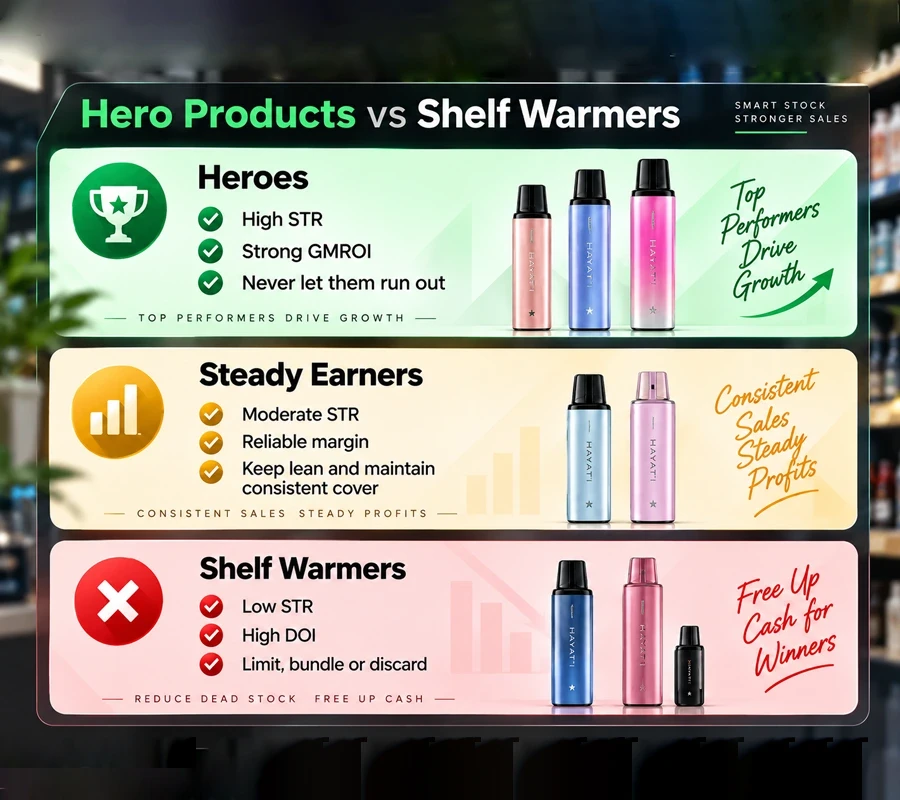
Heroes need constant stock, steady earners need lean but consistent cover, and shelf warmers should be limited, bundled or cleared to free up cash for winners.
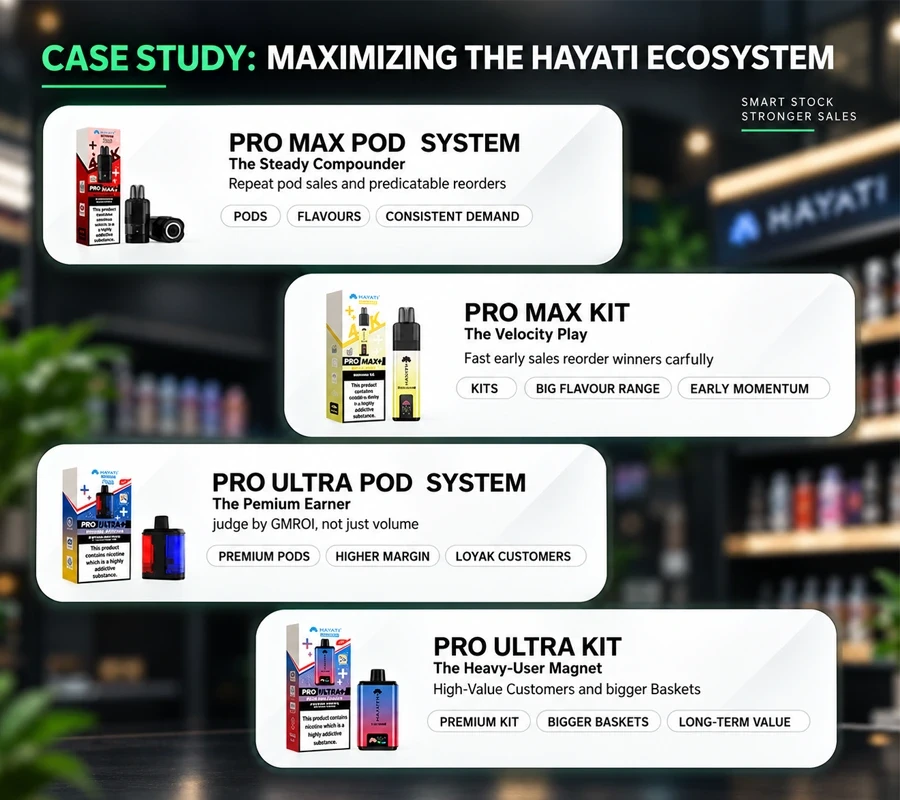
Case Study: Maximizing the Hayati Ecosystem
The Hayati range covers four different
types of income on vape devices, and each requires a slightly different
approach. The numbers below are illustrative, so use your own costs and shelf
prices.
Hayati Pro Max Pod System: The Steady Compounder
The device earns the first income, and the
replacement pods every subsequent one. The consumer cycle is predictable, and
you can plan your pod sales around known replacements. The margin per pod is
not sensational, but repeat visitors cost nothing to acquire.
Data rule:
Track weekly pod sales and set strict reorder limits. Browse the Pro Max 4K and Pro Max 6K ranges and
maintain consistent cover on your top flavours. Predictability means low risk
and high GMROI.
Hayati Pro Max Kit: The Velocity Play
The Pro Max kit delivers high early sales,
particularly on new flavours. However, velocity is a double-edged sword. Flavor
tastes change rapidly, and an over-ordered kit turns into a dead stock in
weeks.
Data rule:
Track weekly STR by flavor, and reorder winners in smaller, more frequent
quantities. Cap any single flavor at approximately two weeks of DOI. New
products on the new arrivals
page should be tested at one pack of five before large follow-up orders.
Hayati Pro Ultra Pod System: The Premium Earner
This is your higher-ticket device, and it
delivers superior gross profit per unit. Imagine a Pro Ultra pod earns £4 gross
profit and sells 10 a week - versus a cheaper pod at £2 and 15 sales. This
produces more overall profit (£40 versus £30) on less stock and fewer customer
visits.
Data rule:
Judge it on GMROI, not volume. Pro Ultra customers buy less frequently but
spend more per visit. Focus on one or two proven flavours rather than cover the
entire range.
Hayati Pro Ultra Kit: The Heavy-User Magnet
The 25,000-puff duo-tank style kit attracts
heavy users who want to stretch their budget and enjoy two flavours. These are
your highest-value customers, and your data will identify them.
Data rule:
Register repeat buyers and their preferred flavor combinations. Place cover on
your three bestselling pairings and track DOI ahead of every reorder, as packs
of five represent more cash tied up per order. Capture these customers, and you
will capture the largest baskets.
The strategy is to use kits to produce
quick cash, and pod systems for compounding. A balance will create short-term
and long-term income.
The Step-by-Step Data Reorder Formula
Apply this formula before placing a
wholesale order.
Step 1: Pull your numbers.
List units sold per SKU for the past four weeks. Calculate average daily sales, STR and DOI for each SKU, and identify your heroes and shelf warmers.Step 2: Set your reorder points.
Reorder point = (Average daily sales × Lead time in days) + Safety stockIf you sell three units a day, delivery takes two days, and you hold four units of safety stock, your reorder point is 10. When your stock reaches 10 units, it is time to order.
Step 3: Calculate your order quantity.
Order quantity = (Target days of cover × Daily sales) − Stock on handAim for 7 to 10 days of cover on kits and around 14 on pod refills. Always confirm stock is compliant and correctly stamped, and our duty stamp guide will show you how.
Conclusion: Let the Numbers Build Your Wealth
Data, not instincts, fuels wealth creation
in retail. That £1 wasted on a shelf warmer could have earned a place on a hero
product. Your sales log contains all the insights, and the next step is to use
them.
Start today. Audit your inventory log,
calculate STR and DOI for your top 10 SKUs, and set your first reorder points.
Then place a more intelligent Hayati order. If you are unfamiliar with our
trade account, open your
trade account and discover bestsellers
first.