
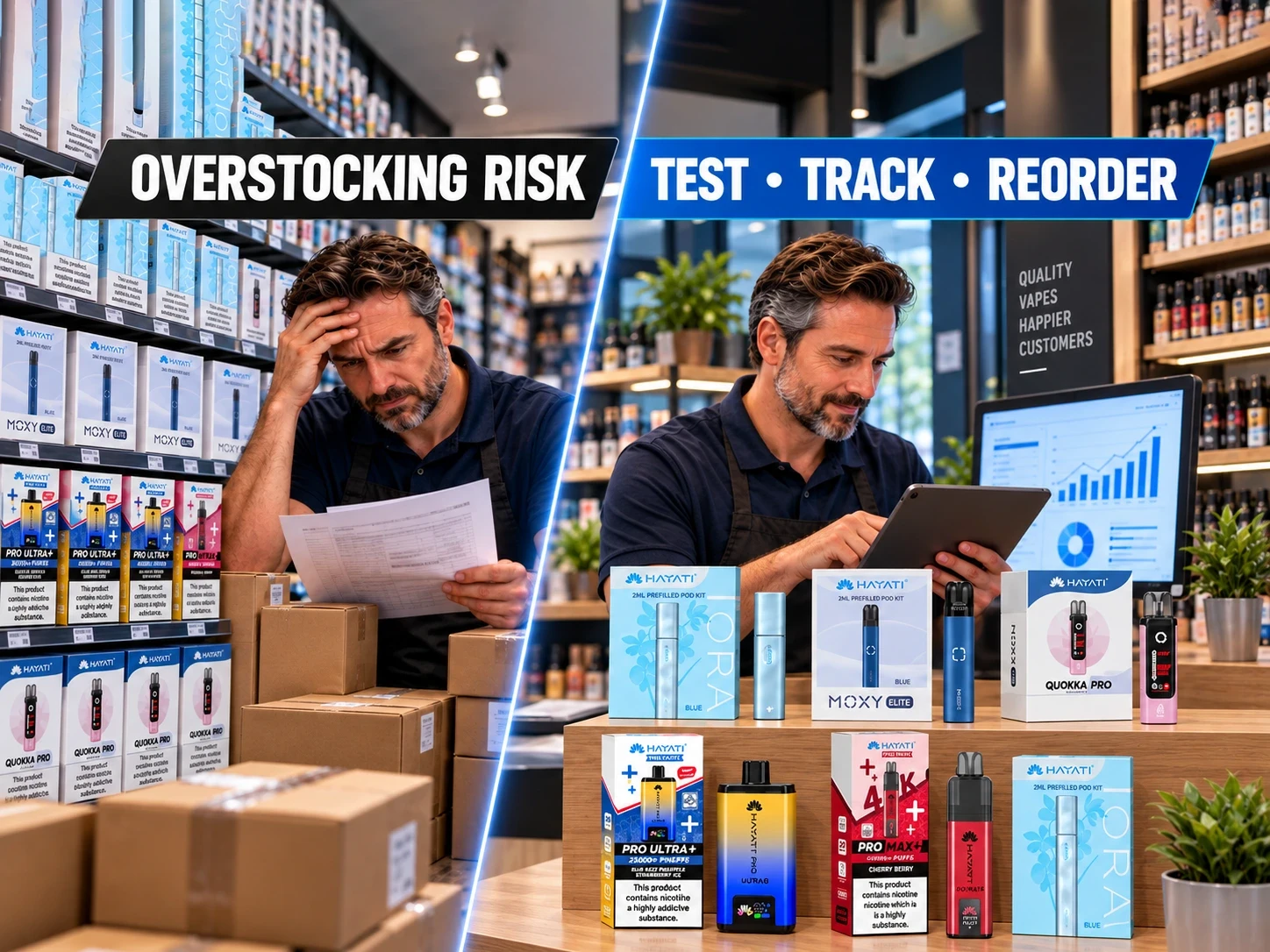
Every independent retailer knows the frustration of buying a product according to a supplier's hot list, bringing in a case or two, and watching it languish on the shelf while customers ask for something else. That is particularly costly in a fast-moving category like vaping.
The alternative is not to keep buying new products. Customers grow tired of seeing the same things, trends change and what sold well last year will not necessarily continue to do so. The key is to limit the risk by testing a selection of products: choosing a small number, buying small quantities and having the sales figures decide what is reordered.
This guide covers how to do that, from selecting a test range to deciding when to reorder and when a product should be dropped.
Why Retailers Should Test New Vape Products
The more shelf space becomes a premium, the more every facing needs to earn its place. Slow-moving products represent more than the cost of stock: they occupy valuable space that faster-selling products could use, and gather dust as they linger on the shelf. Testing reduces the risk of error: any one product failing to sell can be costly.
A test range also helps to focus on what your customers want, rather than what other retailers are buying. A product that sells well at a city centre vape shop may struggle in a country convenience store, and vice versa. The data from a small trial is more relevant to you than a nationwide overview.
There is a practical regulatory reason to consider too. The rules around vaping are continuing to change, and a large purchase of a single line is harder to manage in future. Single-use vapes have been banned for sale in the UK since 1 June 2025, and the Vaping Products Duty and the vaping duty stamps scheme began on 1 October 2026. Further changes to areas such as flavours, packaging and in-store display are expected. Small-scale testing enables you to adapt without being left with large quantities of the wrong product.
None of this guarantees a win, however. Testing does not ensure that every product will sell, and it does not remove risk entirely. It limits the potential loss on any one decision.
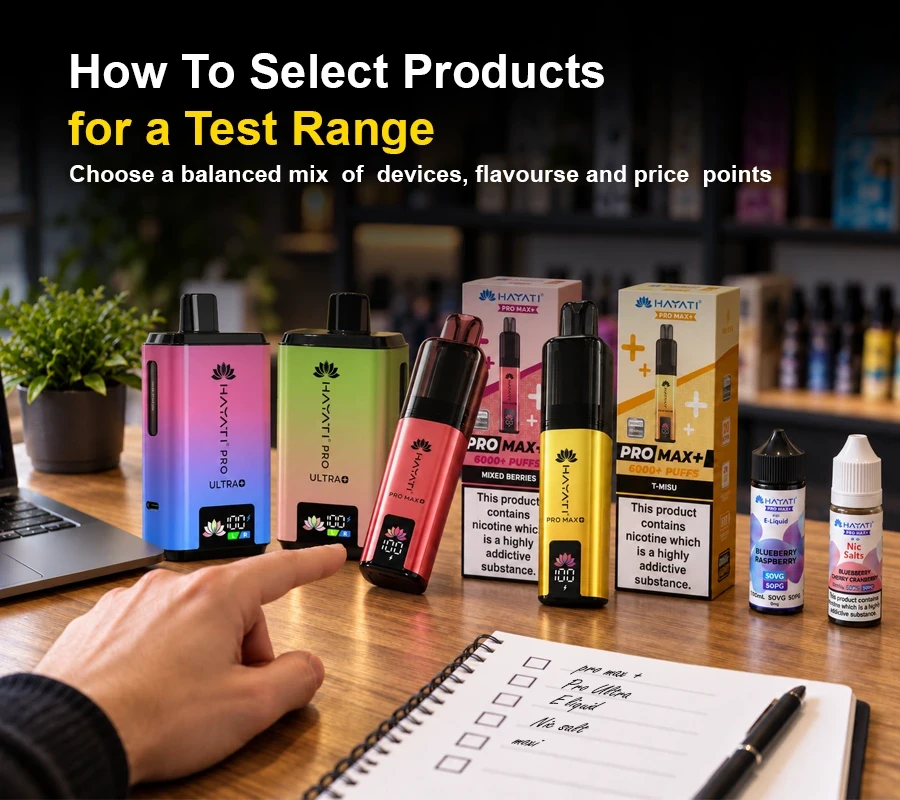
How to Select Products for a Test Range
A test range should be small and focused: four to eight products is sufficient for most independent retailers. More than that and it becomes impossible to draw conclusions about what is and is not working.
Begin from the gaps, rather than the hype. Think about what your customers ask for that you do not have, and what your current range does not cover. The latter might include different nicotine strengths, a different type of product such as a refillable pod kit, or a flavour category you carry little of. Listen to your staff, who may hear requests from customers that never reach the till.
Now apply a few filters to decide what to test:
- Legal compliance. The product must be suitable for the UK market. Ask your supplier to confirm this rather than assuming it. Due to the single-use vape ban, your test range should include refillable and rechargeable products.
- Duty stamp. Since 1 October 2026, new duty-liable stock must bear a duty stamp. Retailers do not need to apply for approval, but ensure the stock you receive is stamped. Stock made or imported before 1 October 2026 that is unstamped can still be sold until 31 March 2027, and all non-suspended vaping products must be stamped after that date. For current duty stamp guidance, see GOV.UK.
- Customer base. Consider who walks through your door. Switchers from smoking, casual users and younger adult customers can have very different needs.
- Range balance. Avoid testing five similar products. Aim for variety in format, flavor and price to gain meaningful insights.
- Supplier assurance. A test is only worth doing if you can reorder the product if it does well. Ask about availability and lead times before you commit.
If the product is brand new, with no known sales history, treat it as a high-risk test and buy the minimum possible.
How to Test New Products Without Overcommitting Stock
A simple principle applies here too: buy the minimum quantity that can provide meaningful insight into the product's potential.
Understand the minima first. Minimum order quantities for vape products tend to vary both between products and between suppliers. Some sell in multiples of full cases, and others in smaller packs. Before selecting products, ask your suppliers about minimum quantities for each line and for the order as a whole, and whether you could buy small quantities of different products in the same case. A supplier that is flexible with minimums is more valuable to you at this stage than one with a slightly lower unit price.
Buy small amounts of multiple products rather than larger amounts of one. Ten units of six products tells you far more than sixty of one.
Set a fixed test period. Four to six weeks is a good starting point for most retailers, as it allows repeat sales to build up rather than testing initial interest alone. Set a start and finish date before you begin.
Decide on success criteria in advance. Deciding what you regard as a pass or fail before seeing the results keeps you honest. It is all too easy to convince yourself that a product you like should continue to be stocked, or that one that did not sell well should be dropped. A short plan prevents this.
Give the products a good chance. Place test products somewhere visible, perhaps a designated bay or clearly marked shelf, rather than in an out-of-the-way corner of the range. A product that nobody can see will deliver no useful results. Make staff aware of the products so they can advise customers, and ensure any displays or promotion comply with the rules for vaping products, so check any current guidance before planning signage.
Keep a simple record. A notebook or spreadsheet will do. Note the quantity on hand at the start, the units sold each week and any customer comments.
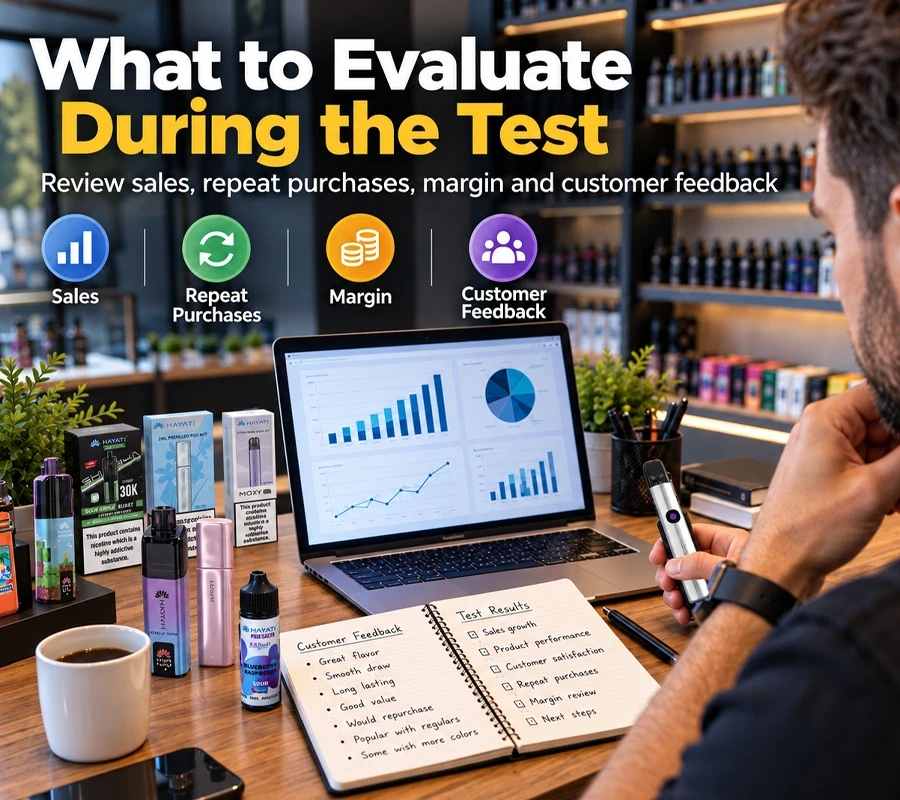
What to Evaluate During the Test
Sales volume alone should not be the sole criterion, however. Evaluate a mix of factors:
- Sell-through rate. What proportion of your test stock was sold during the period? This indicates early demand.
- Speed to first sale. Products that sell quickly tend to have genuine appeal, while those that take weeks to sell may need to be more prominent, or simply do not fit your customer base.
- Repeat sales. One-off sales are often made out of curiosity. Repeat sales indicate a product with real appeal.
- Margin after costs. Consider your margin per unit, including duty (if applicable) and where it is passed on in the price. A product that sells well but at little profit may not be worth the shelf space.
- Customer comments and issues. Any customer feedback, questions, complaints or faults should be recorded, as a product that generates many complaints costs you time even if it sells.
- Fit with your range. Does the product attract new customers, or simply take sales away from something else you stock?
- Staff assessment. Those who serve customers every day often notice patterns your records may miss.
A simple scorecard can help. Rate each product for sell-through, repeat sales, margin and customer feedback out of five, then compare them side by side.
When to Reorder or Drop a Product
Having set criteria makes these decisions straightforward. As an example, you might decide that a product earns a reorder if most of the stock is sold within the test period, some customers come back for more purchases and the margin is satisfactory. You might decide to drop the product if it has barely moved during the test and few customers have asked for it. Set thresholds that work for your business, as there are no universal targets.
There is a third category, however. If the product shows some promise but not enough to warrant a reorder, you could extend the test for a short period, place the product elsewhere or try a small change in price, then re-evaluate. Avoid leaving a product 'on review' for an extended period: it is simply tying up stock.
When reordering, increase the quantity cautiously. Going back to the same supplier with a larger order is safer than jumping straight to a big bulk buy. Check availability and lead times so a successful product does not run out of stock.
When dropping a product, dispose of or discount any remaining stock sensibly. Note why the product failed, as this will improve your next test range.
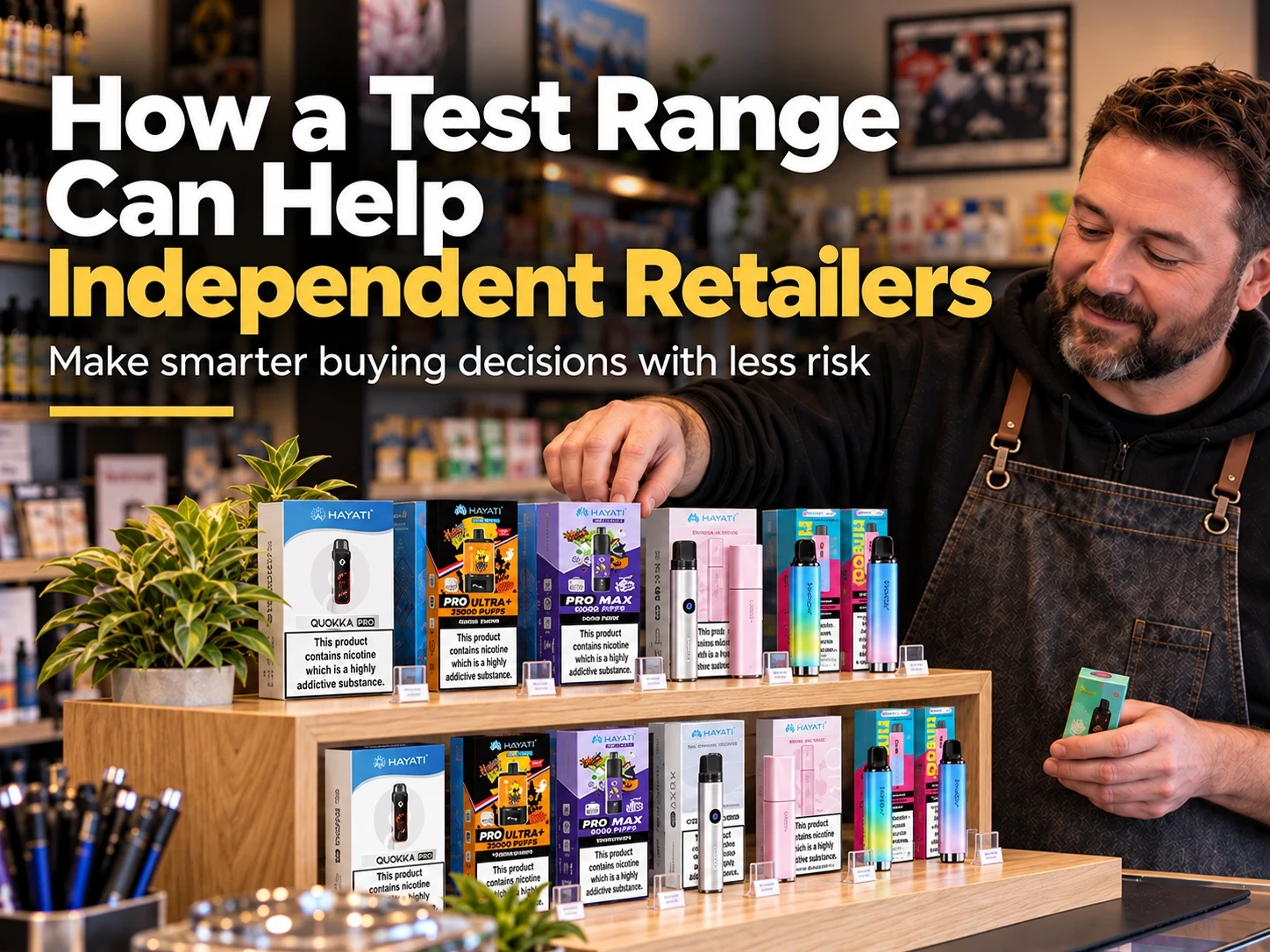
How a Test Range Can Help Independent Retailers
A structured test range removes the guesswork from buying decisions. Rather than negotiating minimums case by case, you have a small, curated selection of products that are suitable for small-scale buying, so you can see what your customers want before committing more stock.
The advantages apply particularly to independent and convenience retailers, who can limit the size of their test range and reduce the amount of unproven stock they hold. They gain a clear understanding of how products compare, based on their own figures rather than guesswork.
If you would rather have a considered selection than build a test range from scratch, you can Build Your Test Range and select a small, flexible mix of products to try in your own store. Verified retailers can open a trade account to see pack sizes and trade pricing.
FAQs
How many new vape products should I test at once? For most retailers, four to eight is a good number. It is enough to test a range of products without overcrowding the shelves or making comparison difficult.
How long should a test last? Four to six weeks is a good period for many retailers, as it allows repeat sales to build up. Some retailers, particularly those with low footfall, might want to consider a slightly longer test.
How much stock should I buy for a test? Buy the smallest quantity your supplier will allow for a fair assessment of the product's potential. Minimum quantities vary between products and between suppliers, so ask about small packs, mixed cases and trial orders before deciding.
Do I need to check anything about duty stamps when testing new products? Yes. Since 1 October 2026, new duty-liable stock should bear a duty stamp. Retailers do not need to apply for HMRC approval but should check that the stock they receive is stamped. Stock made or imported before 1 October 2026 that is unstamped can still be sold until 31 March 2027. For current guidance, see GOV.UK and HMRC.
What if a product sells well but I cannot get it again? This is why it is important to ask about availability and lead times before testing. If a supplier cannot reliably restock the product, a successful test is of limited value.
Can testing guarantee a product will sell? No. Testing reduces the risk of error, but not entirely: it gives you evidence based on your customers rather than unproven guesswork.