
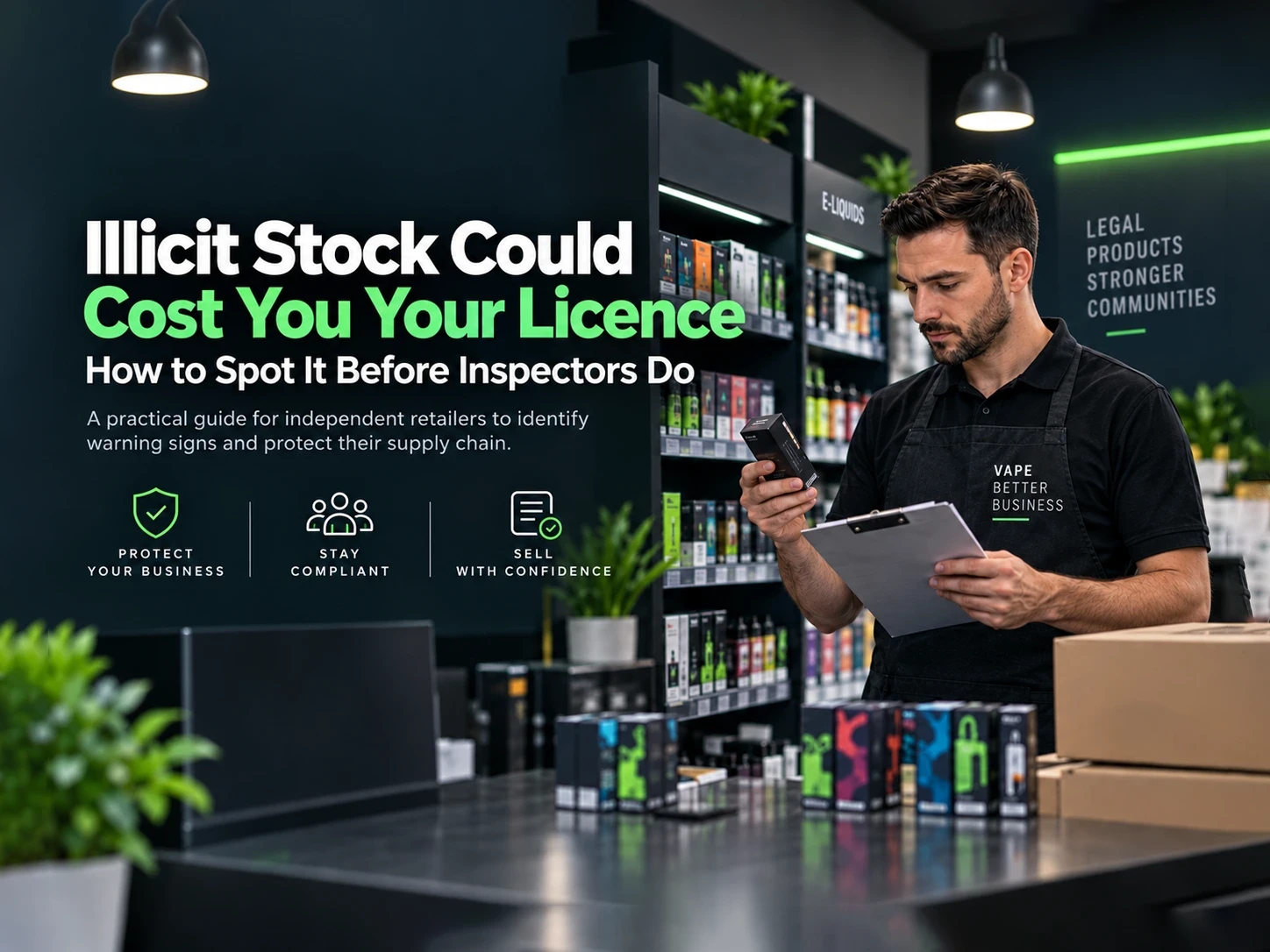
Illicit Stock
Could Cost You Your Licence: How to Spot It Before Inspectors Do
It may not arrive in an unmarked van at
midnight, but illicit stock often arrives in more subtle ways – a friendly
rep’s price list, suspiciously priced cartons and an invoice which seems
entirely in order. A pallet of cigarettes or vapes, all a few pounds under
market price, is easy to say yes to when the finances are tight. But Trading
Standards or HMRC may not be so easy to say no to.
“I didn’t know” will not stand up to a
licensing interview. Inspectors are perfectly within their rights to question
you on what checks you performed and whether you considered the warning signs.
If you respond “none”, “none” and “yes”, you risk more than just the illicit
stock. You risk restrictions, licence review, suspension or revocation – for
most independent retailers, that means livelihood.
This guide covers the cost of illicit stock,
warning signs to look out for and how to protect your supply chain from illicit
stock.
The Real Cost of
Illicit Stock
Non-compliant inventory carries a number of
potential problems.
Financial: Illicit
or non-compliant stock is rarely compensated for. HMRC assesses unpaid duty and
issues civil penalties, and goods liable to forfeiture may include the
vehicles which transported it.
Legal: Breach of tobacco, vaping and other product safety regulations
may result in Trading Standards prosecution and potentially unlimited fines.
Knowingly dealing in duty-evaded goods is a criminal offence, carrying a
custodial sentence of up to seven years in the most serious cases.
Licence:
Preventing crime and disorder is a key objective of the licensing system.
Councils and enforcing bodies may apply for a licence review if smuggled or
counterfeit goods are discovered, with potentially severe consequences.
Reputational:
Closure orders and prosecutions are often publicised, with consequences for
landlords, insurers, banks and customers. Building back trust is much harder
than replacing stock.
The discount on a single cheap pallet of
illicit stock pales in comparison to the potential loss.
Red Flags: How to
Spot Non-Compliant Stock
Illicit stock prevention begins with educating
yourself and your staff to look for warning flags. Counterfeit wholesale goods are often
remarkably well-presented, but there are tell-tale signs.
Packaging
Anomalies
Before accepting any goods into stock, always
perform a visual inspection:
Poor print quality: Are logos blurred, colours off-brand or foil work uneven? Genuine
brands take great care in their presentation.
Spelling and grammar: Authentic manufacturers proofread their materials – if the packaging
is full of typos, that is a major warning sign.
Missing or incorrect health warnings: UK-compliant products carry specific warnings in approved
languages. Unfamiliar languages, absent warnings or “duty free” and “not for
sale in the UK” statements suggest that the goods were not intended for this
market.
Vape-specific checks: Single-use disposable vapes have been banned from sale in the UK since
June 2025. Always check nicotine strength (20mg/ml maximum), tank/bottle size
limits, ingredient/batch labelling and product notification status.
Stamping and tax:
If any duty stamps or tax information are required, they should be
present, unaltered and verifiable. Missing, photocopied or inconsistent
markings are a major concern.
Pricing Traps
Tobacco and many vaping products carry a large
duty and VAT element in their shelf price. A legitimate supplier cannot legally
sell below the duty-paid floor. Calculate the minimum duty-paid cost for each product
category and regard any deal which purports to be below this as suspect. Be
wary of “one-off clearance deals”, “end-of-line bargains” and any pressure to
purchase immediately. Remember that any deal which seems too good to be true
almost certainly is – illicit stock, counterfeits or stock from another market
are all possibilities.
Vendor and
Paperwork Red Flags
Illicit stock suppliers often give themselves
away with their paperwork:
●
Cash-only deals or refusal to take
bank transfers.
●
Incomplete paperwork: No VAT
number, registered address, company number or invoice details, or a trading
name which does not match the invoice.
●
Goods or documents with missing
batch or lot numbers.
●
Refusal to discuss provenance –
where the stock came from and how it was cleared.
●
Unmarked delivery vehicles,
imprecise delivery windows or changing company names and bank details between
orders.
Suppliers who are evasive about any of these
are likely to have something to hide.
Building an
“Audit-Proof” Supply Chain
Compliance is a process, not a state. These
steps will help you protect your retail licence and your evidence if
questioned.
Know your supplier. Before accepting any goods, verify the company against Companies
House, check the VAT number using HMRC’s
online checker. Always obtain written trading terms.
Perform goods-in checks. Always inspect the delivery against the invoice, examining the
packaging and checking for batch or lot numbers. Sign off each delivery, and
quarantine any suspicious goods until they can be resolved.
Track your stock.
Always keep a record of your stock, linking each product
line to its supplier and delivery. This can be as simple as a spreadsheet, so
long as the records are kept consistently and securely.
Keep records.
Retain invoices, delivery notes and payment records for as long as they are
relevant to your business (usually six years for tax purposes). Offsite and cloud
storage can both be viable options.
Pay traceably.
Always pay by bank transfer wherever possible, as cash payments leave no audit
trail.
Train your staff.
Ensure that anyone receiving stock knows what to look for and has the authority
to refuse a suspicious delivery.
Audit regularly.
Always perform shelf stock audits at least quarterly and remove any suspicious
goods.
An inspector who finds organised, documented
and traceable systems has little choice but to commend you, and that can make
all the difference.
Conclusion
Illicit stock can come into any shop, and more
and more often, inspectors expect retailers to prove that they took steps to
prevent it. Every unchecked delivery is a gamble that nobody will look too
closely, and the stakes are your licence. Checking, inspecting, tracking and
recording take time but compared to the cost of licence revocation, they are a
small price to pay. Viewing compliance as an active investment in your most
valuable asset – your business – can help you ensure that your due diligence is
always up to the task. If you’re looking for a supplier that can show its
paperwork, you can open a trade account with us.
Frequently Asked
Questions (FAQ)
What should I do
if I find suspicious stock on my premises?
Remove it from sale immediately and keep it
separate, recording where it came from. Do not return it to your supplier or
dispose of it, as you may destroy evidence. Report it to Trading Standards or HMRC
and keep a record of your report.
What will
inspectors ask for during a visit?
They may ask for invoices, delivery records
and supplier details and a physical inspection of your stock. Having these
documents ready to present shows that you are willing to cooperate.
How do I verify a
new wholesaler?
Check Companies House and validate the VAT
number, request references from other retailers and always ask for full VAT invoices including batch numbers. It
is advisable to begin with a small order until you are confident.
Can I lose my
licence if I bought stock in good faith?
It is possible but unlikely. You would have to
demonstrate that you took reasonable steps to ensure the stock was compliant.
Ignoring obvious warning signs will make it much harder to defend yourself.